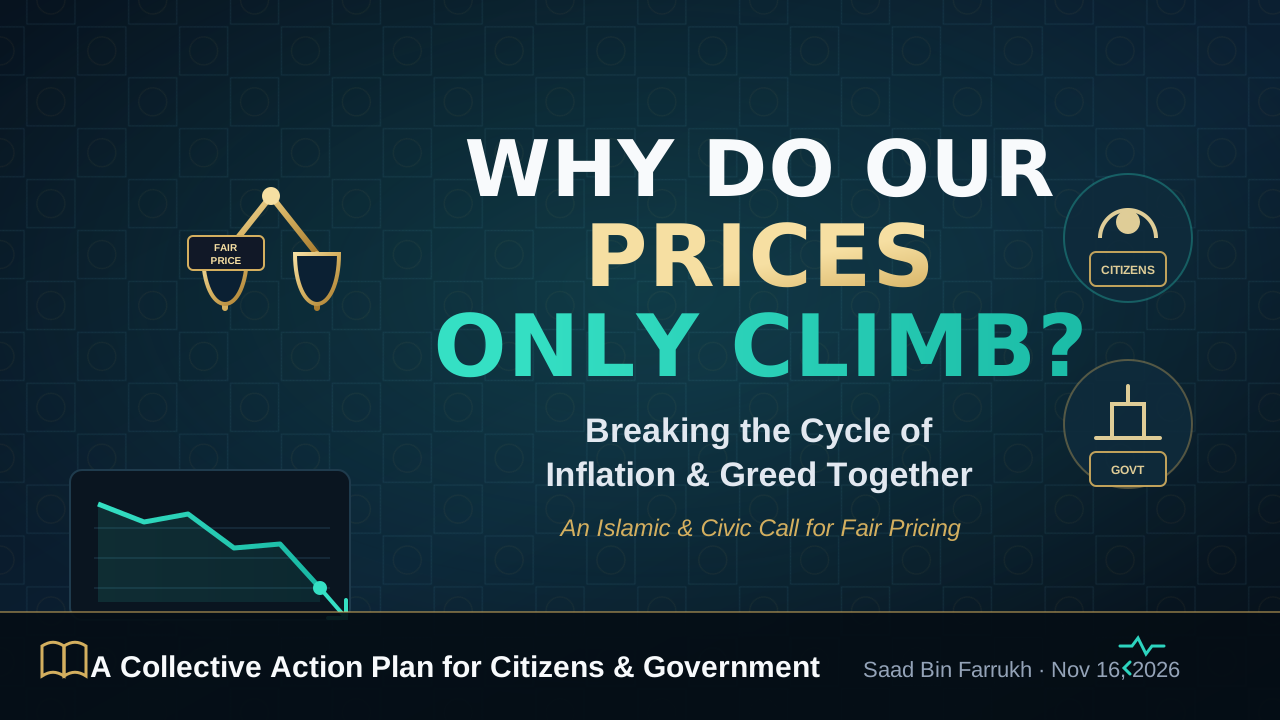
Every single one of us has witnessed this frustrating economic reflex: the very night petrol or diesel increases by a single rupee, transport fares jump by ten, grocery prices surge by twenty, and service charges immediately adjust upward. The justification is always instant and unquestioned: "Fuel and raw material costs have gone up."
Yet, look at what happens when the reverse occurs. Even when petrol prices drop significantly—such as the nearly 16% decline seen recently across Pakistan—transport fares remain stubbornly high, essential household items continue to climb, and service providers quietly pocket the margin as "recovery for past losses." Economists call this asymmetric price transmission or "rockets and feathers"—prices shoot up like a rocket when costs rise, and drift down like a feather (if at all) when costs fall.
Inflation is not merely a macroeconomic statistic dictated by central banks or global oil markets; it is also a mirror of our collective social ethics. If we want genuine relief, we must confront the uncomfortable truth that we are often inflating each other’s lives.
The Moral Imperative: Fair Pricing and Rejecting Greed in Islam
In a society grounded in Islamic values, commerce is not a ruthless zero-sum game where one person’s desperation is another’s opportunity. Trade is an act of worship when conducted with honesty, mercy, and justice (Adl).
1. The Prohibition of Unjust Gain and Exploitation
Allah (SWT) commands believers to uphold strict fairness in all commercial dealings and explicitly forbids devouring wealth through unjust means:
"O you who have believed, do not consume one another’s wealth unjustly but only [in lawful] business by mutual consent."
When a vendor, transporter, or manufacturer raises prices instantly on the pretext of rising fuel costs, but refuses to lower them when fuel and raw materials drop, that excess margin crosses from legitimate profit into unjust enrichment.
2. The Condemnation of Hoarding and Artificial Scarcity
Many price hikes are driven not by actual cost increases, but by speculative hoarding (Ihtikar) and opportunistic markups. The Prophet Muhammad (ﷺ) issued a severe warning against those who exploit public need for profit:
"Whoever hoards food (and essentials) to raise its price for the Muslims is a sinner."
In another narration, the Messenger of Allah (ﷺ) stated:
"The one who brings goods to the market is blessed with provision, and the one who hoards them is cursed."
3. Mercy in Buying and Selling Brings Barakah
True prosperity does not come from squeezing the last rupee out of a customer; it comes from Barakah (divine blessing). The Prophet (ﷺ) specifically prayed for those who show leniency and generosity in trade:
"May Allah have mercy on a man who is lenient when he sells, lenient when he buys, and lenient when he demands his right."
When we intentionally lower our prices as input costs fall, we embody this prophetic leniency—turning our businesses into sources of relief for our neighbors rather than burdens.
A Collective Action Plan: How We Make Life Easier Together
Breaking this cycle requires simultaneous commitment from both the people on the ground and the institutions governing our markets.
For Citizens, Traders, and Business Owners
- Adopt Symmetric Pricing ("Pass the Relief Forward"): Commit to an internal rule within your business: whenever freight, fuel, electricity, or raw material costs drop by a measurable percentage, pass a proportional reduction directly to your customers within 48 hours.
- Publicize Your Price Cuts: Normalize ethical commerce. Put a sign on your shop, post on your company page, or inform your clients: "Fuel and input costs dropped this week, so we have reduced our prices by X%." Ethical competition forces greedy competitors to adjust.
- Refuse Panic Buying and Opportunistic Margin Padding: Consumers drive artificial inflation when they panic-buy, and retailers worsen it by pricing current stock at anticipated future replacement costs. Price goods based on actual landed cost, not fear.
- Support Ethical Vendors: Vote with your wallet. Actively reward transporters, retailers, and service providers who lower prices during relief cycles, and call out unjustified price rigidity constructively.
For Government Bodies and Regulators
- Enforce Dynamic Fare and Rate Revisions: Regulatory authorities (such as District Price Control Committees, OGRA, and Regional Transport Authorities) must not wait weeks to revise official fare charts and DC rates. Digital rate notifications should trigger mandatory, immediate downward revisions for public transport, freight, and essential commodities.
- Deploy Transparent Cost-Breakdown Dashboards: Publish simple, accessible public breakdowns showing how much fuel and raw materials actually contribute to the unit cost of flour, sugar, milk, vegetables, and commuter fares. When citizens know that a Rs. 15 drop in fuel equals a specific per-kilometer or per-kilogram cost reduction, middlemen cannot hide behind vague excuses.
- Crack Down on Cartelization and Supply-Chain Bottlenecks: Shift enforcement focus from penalizing small street vendors to dismantling wholesale cartels, mandi mafias, and hoarding syndicates that block price drops from ever reaching the retail level.
- Incentivize Compliant Businesses: Offer tax rebates, faster licensing, or public recognition through Chambers of Commerce for registered businesses and transport unions that demonstrably pass input cost reductions on to consumers.
A Call to Action
We cannot keep blaming the system while replicating the exact same exploitation at our own level. Every transporter, shopkeeper, manufacturer, service provider, and corporate leader holds a piece of the inflation puzzle.
If we expect Allah’s mercy on our livelihoods, we must first become a source of mercy to His creation. Let us start a new norm today: when costs rise, we bear the burden together; when costs fall, we share the relief immediately.
To every business owner, entrepreneur, and professional reading this: What is one price, fee, or rate in your control that you can intentionally reduce or hold steady this month to make life easier for someone else? Share your commitment in the comments below and let’s build an economy rooted in trust, fairness, and Barakah.